
Build the relationship after they leave.
Buyers often leave before they are ready for sales. DirectReach uses targeted advertising and useful content to stay visible, then helps you review engagement patterns over time.
Stay visible. Stay useful. Recognize growing interest.
One website visit should not have to do all the work.
Stay visible.
Highly targeted digital advertising keeps your company in front of the right accounts and people while the problem is still taking shape.
Stay useful.
Problem Room and Solution Room content keeps helping the buyer think instead of turning every interaction into a meeting request.
Recognize signs of growing interest.
Repeated visits and engagement with different content can help sales decide when a conversation may be useful.
Advertising should create presence, not pressure.
Targeted advertising helps buyers encounter useful ideas and keeps your company familiar while they consider their options.
Before they ever visit.
Introduce relevant problems to the companies and buyers you want to reach.
After they leave.
Follow the first visit with useful content about the problem and possible approaches.
DirectAI is in development to help buyers find you. DirectReach focuses on staying visible and useful while buyers decide.
A single visit does not tell the whole story.
Buyers may return, read different pages, or go quiet. Review the available signals together rather than treating one click as intent.
One visit on its own
Anonymous visitor. A few pages. Left without converting.
An engagement pattern to review
For example, repeated visits to problem and solution content may suggest growing interest. They do not prove purchase intent or readiness.
Six phases, in order. The conversation comes last.
BRIDGE organizes the work: create useful content, review engagement, guide the journey, and decide when sales should engage.
Build
Create useful Problem and Solution Room content first.
Reveal
Review available company and contact signals alongside engagement.
Interpret
Read patterns over time instead of treating every click like intent.
Deliver
Put the right content in front of the right buyer through advertising, email, and the channels that fit the account.
Guide
Help buyers move from problem understanding toward solution thinking without forcing the sequence.
Engage
Bring sales in when the pattern says a real conversation is likely to be useful.
Read engagement patterns over time.
Use the pattern to inform a conversation. Activity alone cannot tell you what a buyer is thinking.
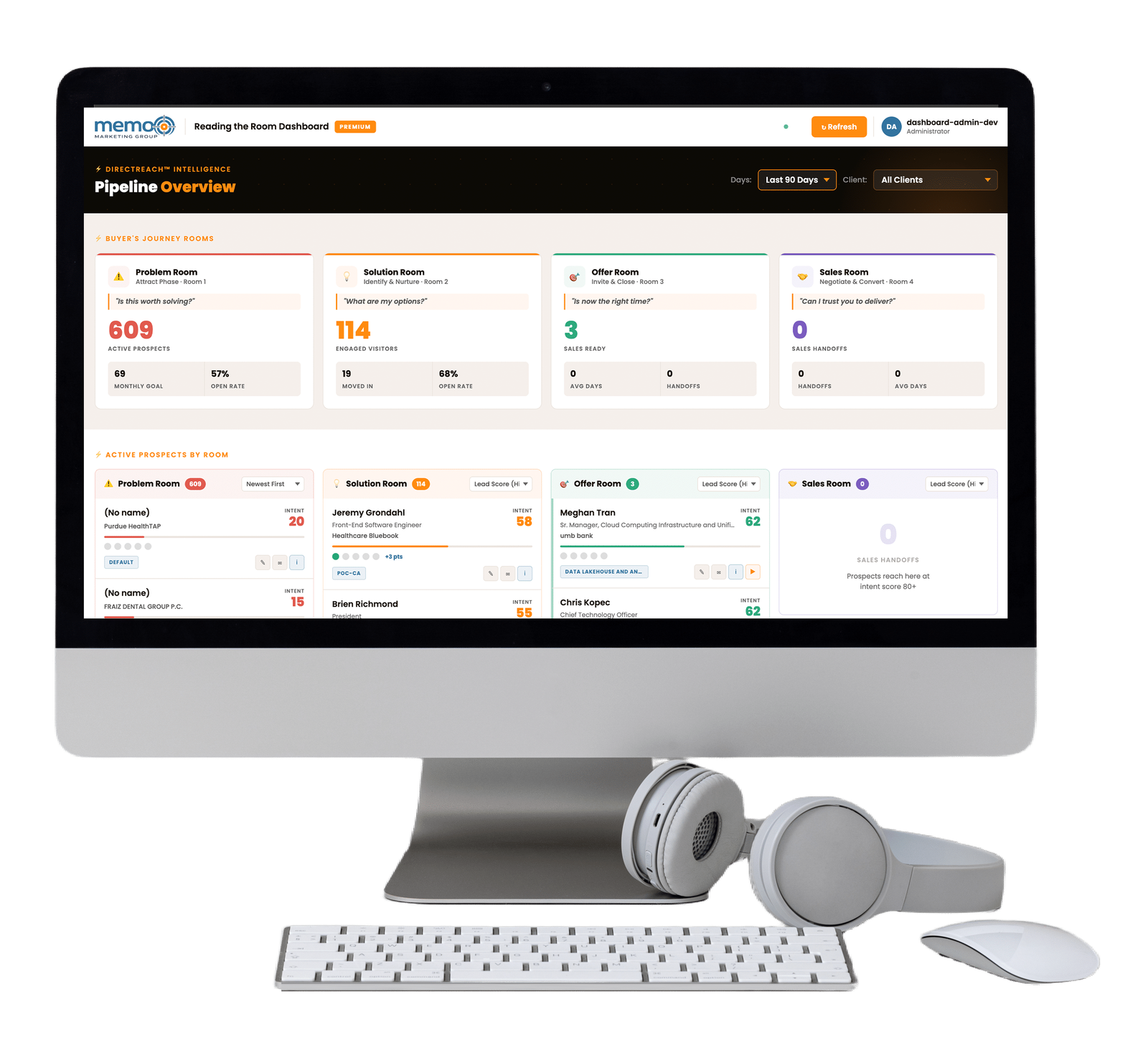
The dashboard is there to respect timing, not manufacture urgency.
Not yet is not no.
Silence can have many causes. Keep offering useful ideas without treating every pause as a reason to chase the buyer.
Most shops lose the second order for a reason nobody writes down anywhere. The part was fine. The date moved twice.
Here's a quick way to check it. Ask your team how many jobs shipped late last quarter, then go see how many of those customers ordered again.
Fewer wasted conversations. Better-prepared buyers.
Keep helping buyers while they consider their options. Use engagement signals and what sales learns to decide the next useful step.